

What’s New in the 2025 GRI Energy Standard: GRI 103 vs GRI 302
- 29/06/2025
- Posted by: Ildar Usmanov
- Category: ESG Reports
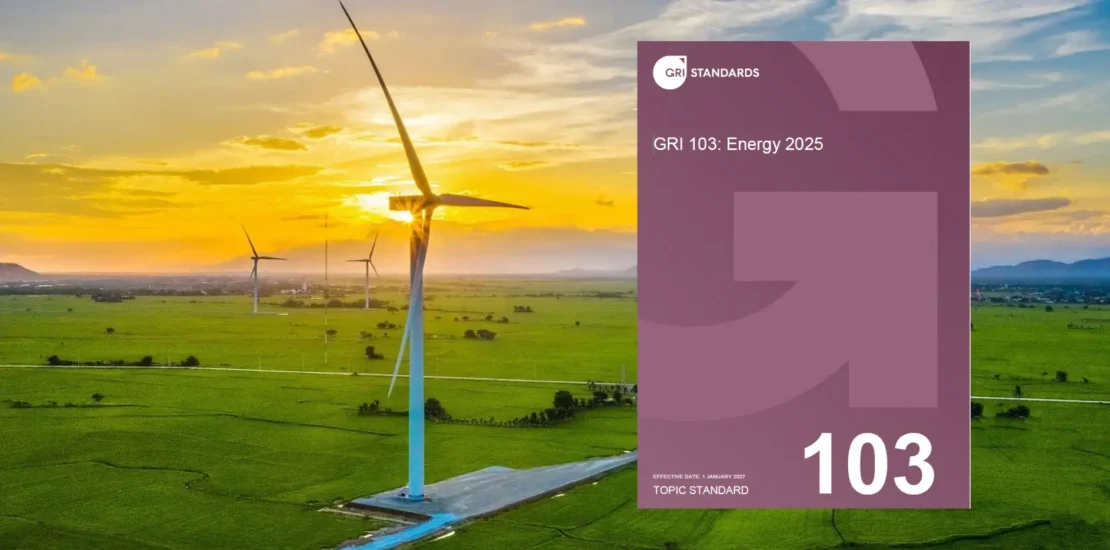
The new 2025 GRI Energy standard is undergoing a major upgrade. GRI 103: Energy 2025 will replace GRI 302: Energy 2016 starting in 2027. This shift reflects growing expectations for transparency, energy transition planning, and climate impact disclosures.
If your company is reporting energy use under GRI, here’s what you need to know about the changes.
Summary of Key Changes in the 2025 GRI Energy Standard
-
GRI 103 introduces five mandatory disclosures, all significantly more detailed.
-
A new disclosure on policies and commitments (103-1) aligns with the 1.5°C target and adds social and economic context.
-
Companies must report granular energy data including upstream/downstream use, self-generation, and energy sourcing contracts.
-
Energy reductions now need to be clearly separated by cause — such as energy-saving projects vs reduced output.
-
GRI 302-5 (energy-efficient products) is no longer mandatory, but can be included voluntarily under 103-5 guidance.
GRI Energy Standard Comparison Table
| GRI 302: Energy 2016 Disclosure (Effective 2018) | GRI 103: Energy 2025 Disclosure (Effective 2027) | Disclosure Change | Level of Effort to Comply (Relative to Previous) |
|---|---|---|---|
| Clause 1.1: Management approach (refers to GRI 3-3) | 103-1: Energy policies and commitments | New / Significantly Expanded: Dedicated, detailed disclosure on policies, 1.5°C-aligned targets, economy/environment/people impacts, stakeholder engagement. | High (Strategic integration & new data points) |
| 302-1: Energy consumption within the organization | 103-2: Energy consumption and self-generation within the organization | Revised / Expanded: Granular activity-level breakdown, new requirements for contractual instruments & quality criteria. | Medium to High |
| 302-2: Energy consumption outside of the organization | 103-3: Upstream and downstream energy consumption | Revised / Expanded: Focus on significant consumption; renewable vs non-renewable breakdown; estimation allowed with disclosure of % accuracy. | Medium to High |
| 302-3: Energy intensity | 103-4: Energy intensity | Revised: Clarifies numerator/denominator; requires specifying types of energy used. | Low to Medium |
| 302-4: Reduction of energy consumption | 103-5: Reduction in energy consumption | Revised / Expanded: Must differentiate by cause; includes value chain reductions; base year rationale required. | Medium to High |
| 302-5: Reductions in energy requirements of products and services | Integrated into 103-5 (Guidance) | Integrated / Less Explicit: Optional under 103-5 guidance; no longer mandatory. | Lower direct effort |
What This Means for You
-
More strategic planning is required.
You’ll need to link energy policies to climate goals and stakeholder impacts. -
Energy data must be more specific.
Expect to report by activity, source type, and upstream/downstream relevance. -
Start preparing now.
Though GRI 103 becomes effective in 2027, early adopters will benefit from improved ESG ratings and supply chain credibility.
Ready to Transition?
If your organization is still using GRI 302, it’s time to review your material topics, update your internal data collection processes, and begin aligning with the 2025 GRI Energy standard 2025.
Need support transitioning to GRI 103?
Contact our team at SuSciCo — we help Malaysian manufacturers and SMEs prepare for evolving ESG and energy disclosure expectations.

Preparing for Compliance: Recommendations for SMEs
Malaysian SMEs should proactively:
- Strengthen internal systems for detailed energy data collection.
- Engage key departments early to ensure compliance with granular reporting requirements.
- Establish clear energy policies and targets aligning with the global 1.5°C goal.
- Leverage external sustainability expertise when necessary to bridge capacity gaps.
For additional guidance:
Conclusion: Embracing the New 2025 GRI Energy Standard
The New GRI 103 Energy Standard represents a pivotal advancement for transparent and impactful energy reporting. For Malaysian SMEs, embracing this standard is not merely compliance but an opportunity to demonstrate leadership in sustainable energy management. Early adoption positions companies strategically in a rapidly evolving global sustainability landscape.
SuSciCo helps SMEs in implementing Sustainability Practices
At SuSciCo, we help companies implement a Customer-Centric Sustainability approach by integrating ESG principles into their strategies. Our services include GHG management, sustainability reporting (GRI, IFRS, Bursa Malaysia), supply chain optimization, and ISO 14001 EMS development. We offer PCF and LCA assessments, sustainable procurement strategies, and waste management solutions to align products and operations with customer expectations. Through tailored ESG training and stakeholder engagement, we empower businesses to reduce environmental impacts, foster innovation, and build trust for sustainable growth.
how can we help you?
Ready to align profitability with impactful ESG strategies? Contact us today to discuss how we can help your business thrive sustainably.
SuSciCo conducted the Life Cycle Assessment in a smooth and efficient manner, making the entire process clear and straightforward for us. The final report was highly informative and provided valuable insights for our work. We truly appreciated their responsiveness, professionalism, and commitment to delivering quality results.

At Zero Waste Earth Store we are incredibly grateful for the exceptional GHG reporting services provided by SuSciCo. Their expertise and dedication played a crucial role in the promotion of our successful recycling campaign. Their accurate measurement and reporting of greenhouse gas emissions allowed us to showcase the significant environmental impact of our recycling efforts. Professionalism, attention to detail, and commitment to sustainability made SuSciCo an invaluable partner in our mission. I highly recommend their services to any organization seeking to make a positive environmental difference. Thank you, Ildar Usmanov, for your outstanding support!
