- 15/06/2026
- Posted by: Ildar Usmanov
- Categories: ESG Reports, ESG Training, Supplier/Exporter
ESG Readiness Should Come Before ESG Certification
Many Malaysian manufacturers are now facing ESG pressure from several directions at once.
Customers may ask for ESG information. Banks may ask about sustainability practices. Management may want a clearer ESG roadmap. Industry programmes and national ESG initiatives may also raise questions about readiness, reporting, certification or verification.
This creates a practical question:
Should the company start with certification, ESG reporting, training, GHG accounting or internal implementation?
For many SMEs and mid-tier manufacturers, the better starting point is simpler:
Start with ESG readiness.
Why ESG readiness matters before the formal pathway
An ESG readiness programme for Malaysia-based manufacturers should help the company understand whether its internal ESG foundation is strong enough before it moves into formal reporting, certification, verification or customer-facing claims.
This matters because ESG problems often appear late.
A company may already have environmental, safety, HR, governance and operational records. But the information may not be organised for ESG disclosure.
The issue is usually not lack of activity.
The issue is whether the company can explain, evidence and repeat the information properly.
Before pursuing a formal ESG pathway, management should know whether the company has clear data ownership, reasonable evidence, a defined reporting boundary and practical priorities.
Without this foundation, ESG can become a rushed document exercise.
Certification and readiness are not the same thing
Formal certification, verification, personnel certification or official programme status has a specific role. These outcomes should be issued by the relevant authorised body, certification body, verification body or programme owner.
A consultant’s role is different.
SuSciCo does not issue SIRIM certification or official ESG-Ready status.
SuSciCo supports the preparation work before those pathways become relevant.
That preparation may include helping the company understand its ESG gaps, structure internal responsibilities, prepare ESG and GHG data, improve evidence control, support sustainability reporting and build internal capability.
This distinction protects the company.
It also helps management avoid confusing “having an ESG report” with “having an ESG system that can support the report.”
What Malaysian manufacturers usually need to clarify first
For an early-stage manufacturer, the first ESG challenge is often not the report itself.
It is clarity.
Management usually needs to understand:
What ESG topics are relevant to the business?
Which departments need to provide information?
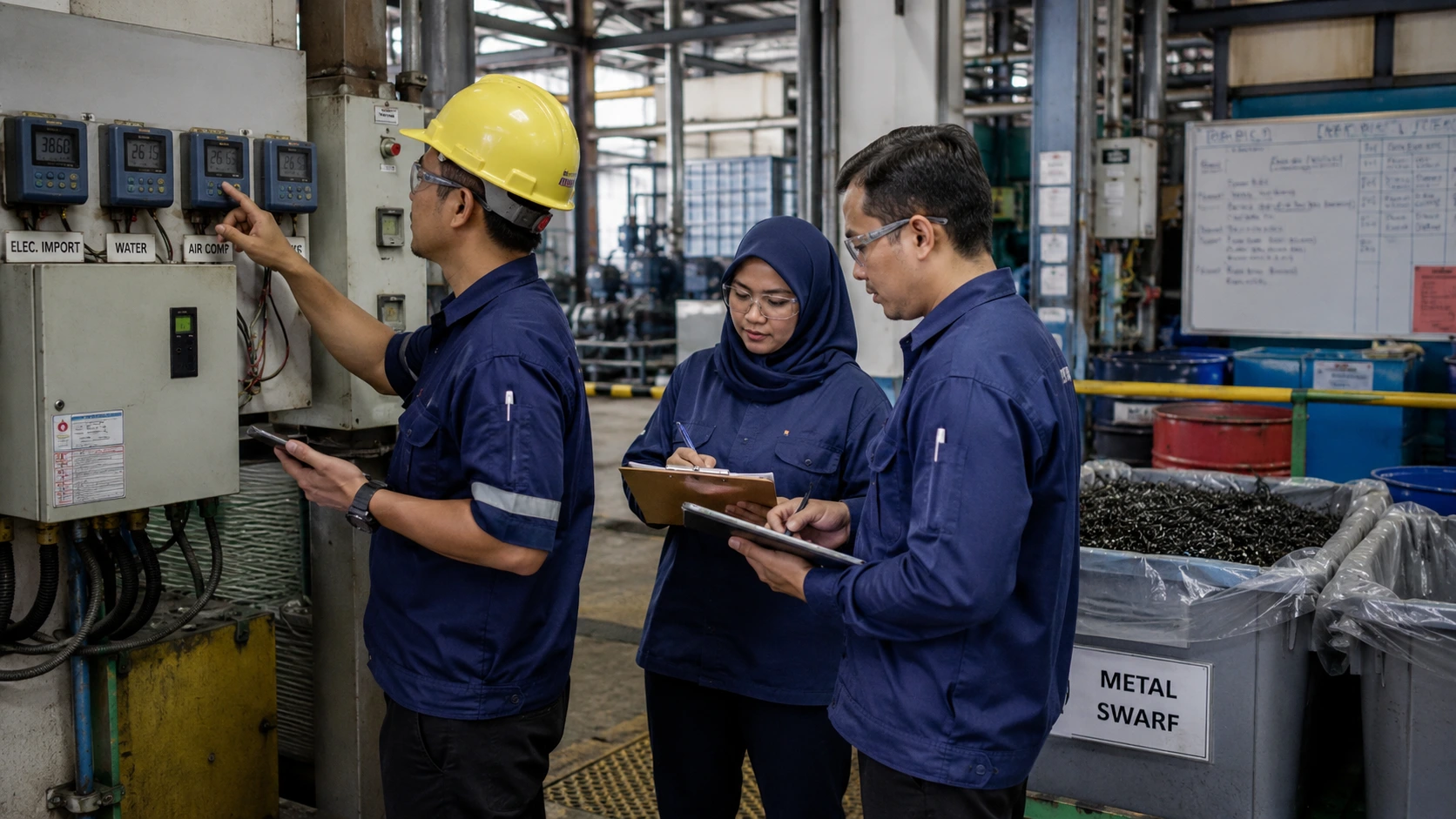
What data is already available?
What evidence supports the company’s ESG statements?
What level of reporting or implementation is realistic this year?
These questions should be clarified before the company spends heavily on reporting, certification preparation or complex sustainability initiatives.
This is where ESG gap analysis is useful.
It gives management a clearer view of the company’s current position and the practical work needed before moving further.
Why internal ownership matters
ESG information does not sit in one department.
It usually comes from operations, finance, HR, EHS, procurement, logistics, management and other business functions.
If ESG is treated only as the responsibility of one ESG officer or one external consultant, the system remains weak.
For ESG readiness to improve, internal data owners need to understand what they are responsible for and why the information matters.
This is one reason capacity-building is often more useful than a black-box consulting approach.
The company does not only need outputs.
It needs enough internal understanding to maintain ESG information after the first project is completed.
ESG readiness is also about GHG data
For manufacturers, greenhouse gas emissions are usually part of the ESG readiness discussion.
A practical first step is to understand the company’s organisational boundary, major emissions sources and available data.
Many companies can start with Scope 1 and Scope 2 emissions, then consider selected Scope 3 categories where the data is relevant and available.
The key point is not to claim too much too early.
The key point is to build a controlled and explainable emissions baseline.
This helps the company respond more confidently to management, customers, lenders or future reporting requirements.
How SuSciCo supports ESG readiness
SuSciCo is a Malaysia-based ESG, GHG and carbon consulting and training firm.
We support manufacturers and suppliers that need practical ESG implementation, GHG accounting, sustainability reporting support and internal capacity building.
Our work is designed to help companies clarify their starting point, strengthen ESG data, improve evidence discipline and prepare more credible disclosures.
This can support companies that are preparing for customer ESG requests, sustainability reporting, internal review, future assurance discussions or formal programme pathways.
It does not replace certification, external assurance, verification opinion or official programme approval.
Start with the right first step
For Malaysian manufacturers, ESG readiness should not begin as a branding exercise.
It should begin as a practical management exercise.
Before asking whether the company is ready for certification, verification or formal ESG status, management should ask a more basic question:
Are we ready to explain and support our ESG information?
If the answer is unclear, the next step is not to rush into a report.
The next step is to assess the company’s ESG readiness and build the foundation properly.
SuSciCo supports Malaysian companies with ESG readiness assessment, ESG implementation support, GHG accounting, sustainability reporting support and practical ESG training.
To discuss the right starting point for your company, request an online discussion with SuSciCo.
Relevant SuSciCo support:
how can we help you?
Ready to align profitability with impactful ESG strategies? Contact us today to discuss how we can help your business thrive sustainably.
Working with SuSciCo has been a valuable part of Tomcare Resources’ ESG journey. From helping us build a stronger understanding of ESG to guiding us through the process of strengthening our sustainability practices. With their support, we progressed from initial ESG awareness to achieving an EcoVadis medal, and we greatly appreciate SuSciCo’s commitment and partnership throughout the journey.

The training was highly practical, relevant and well-structured. What we found particularly valuable was the hands-on approach to identifying relevant Scope 3 categories, mapping data sources and owners and working through different calculation methods. Mr. Ildar demonstrated strong technical knowledge and was very effective in translating the requirements into practical steps that are relevant to our business operations.

“SuSciCo delivered a series of practical and well-structured ESG training sessions tailored to FJM’s needs. Their strong technical knowledge, clear guidance, and professional approach helped our team better understand and apply key sustainability concepts. We would be pleased to recommend SuSciCo for practical ESG training and advisory support.”

SuSciCo conducted the Life Cycle Assessment in a smooth and efficient manner, making the entire process clear and straightforward for us. The final report was highly informative and provided valuable insights for our work. We truly appreciated their responsiveness, professionalism, and commitment to delivering quality results.

“At Zero Waste Earth Store, we are incredibly grateful for SuSciCo’s exceptional GHG reporting services. Their expertise, professionalism, and attention to detail helped us accurately measure and communicate the environmental impact of our recycling efforts. We highly recommend SuSciCo to any organisation seeking reliable sustainability support.”
